AI agents are getting really good at completing complex workflows across the internet, but the infrastructure that lets them buy services autonomously is only beginning to take shape. Agentic commerce is the emerging infrastructure that lets agents discover tools, pay for digital services, and execute transactions autonomously. Protocols such as MCP, ACP, x402, UCP, L402, and (most recently) MPP are early attempts to build this infrastructure. They're the foundation of what may become an agentic economy.
Key terms in agentic commerce
The ecosystem around agentic commerce is developing quickly, and several new concepts and protocols are popping up at the same time. The glossary below defines key terms we'll refer to in this article.
Why agents need the ability to pay
AI agents can research markets, write code, analyze datasets, coordinate workflows, and interact with external services through APIs and tools. As large language models become more capable and agent frameworks mature, these systems are moving beyond isolated tasks toward multi-step autonomous workflows.
But the capability of AI agents to easily buy things at scale is still not widely adopted.
An agent may know exactly which dataset it needs, which API will produce the best answer, or which service provider could complete a task. Yet the moment money needs to move - purchasing access to data, paying for compute, or hiring another service - the workflow usually stops and waits for a human.
Without purchasing capabilities, AI agents remain powerful assistants rather than autonomous economic actors.
Revisiting HTTP 402
Interestingly, the idea of machine-native payments on the internet isn't new. The original HTTP specification defined a status code called 402 Payment Required. The concept was straightforward: a server could request payment before granting access to a resource. In practice, however, the mechanism was never implemented.
A taxonomy for agentic commerce
Traditional internet commerce is usually described with human business labels: B2B, B2C, C2C. Those still matter, but they're no longer enough.
1. Human-in-the-loop consumer commerce
An agent helps a user discover and buy something, but the purchase is still fundamentally a consumer checkout flow. This is the world of Agentic Commerce Protocol (ACP).
2. Agent-to-Business (A2B) operational payments
A2B is where an agent is authorized to pay a business for a service, workflow step, contractor, or resource.
3. Agent-to-Agent (A2A) service exchange
A2A is the most ambitious category and the one that gives the agentic economy its name. One agent hires another, delegates a subtask, purchases data or inference, or coordinates a multi-step workflow across organizational boundaries.
The agentic economy stack
Once you stop treating all agentic commerce as one thing, the architecture becomes much clearer: a discovery layer (MCP), an identity and trust layer, an authorization layer, a payments layer (ACP, x402, UCP, L402, MPP), and an observability layer.
A closer look at the core protocols
Model Context Protocol (MCP)
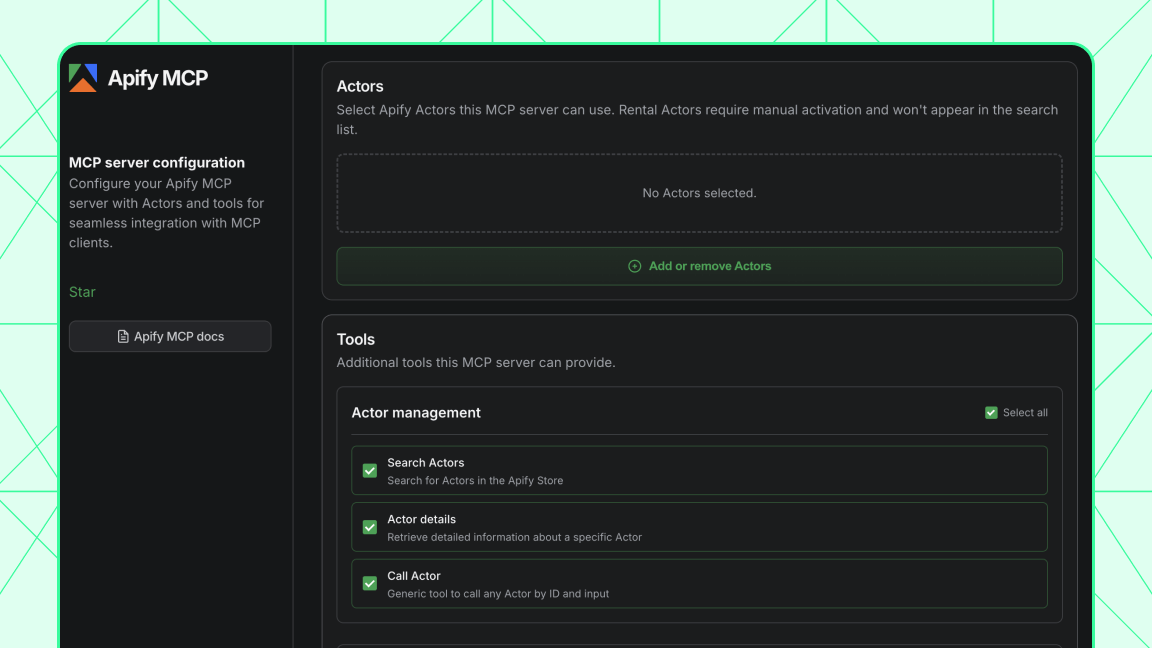
MCP was developed by Anthropic and open-sourced in November 2024. It provides a standardized interface for AI agents to connect to external tools, data sources, and services. MCP doesn't handle payments - it's the connectivity layer that makes tools accessible.
Agentic Commerce Protocol (ACP)
ACP is an open standard for agent-mediated consumer checkout, co-developed by Stripe and OpenAI. The end buyer is always a human.
x402
x402 was created by Coinbase and revives the long-dormant HTTP 402 status code to enable machine-native payments directly over HTTP, settling in USDC on Base and Solana.
Machine Payments Protocol (MPP)
MPP is an open-source standard for machine-native payments co-authored by Stripe and Tempo. It introduces a sessions primitive: an agent authorizes a spending limit upfront and can then stream micropayments continuously.
Conclusion: It's about the stack, not the protocol
The agentic economy isn't one market, but a stack of markets. MCP solves discovery and connectivity. ACP solves agent-ready checkout. x402 and L402 solve machine-native pay-per-use. MPP provides a rail-agnostic sessions layer. The question isn't whether agents will transact, but which infrastructure will make them first-class economic actors.